
How to Feel Truly Loved (with Dr. Sonja Lyubomirsky and Dr. Harry Reis)

New episode of The Happiness Lab: How to Feel Truly Loved (with Dr. Sonja Lyubomirsky and Dr. Harry Reis)
Most of us want to feel loved, but our minds don’t always make that easy. We often expect love to announce itself clearly, yet the research suggests that feeling loved depends on subtle judgments about whether others understand us, value us, and care about our needs. When those judgments are biased toward threat or rejection, love can be present without ever fully landing.
So how do we notice love more accurately? This week on The Happiness Lab, I talk with social psychologists Dr. Sonja Lyubomirsky and Dr. Harry Reis about what research reveals about how love actually works, why we so often miss it, and what helps us feel more genuinely cared for.
Listen to the full conversation, “How to Feel Truly Loved (with Dr. Sonja Lyubomirsky and Dr. Harry Reis)“
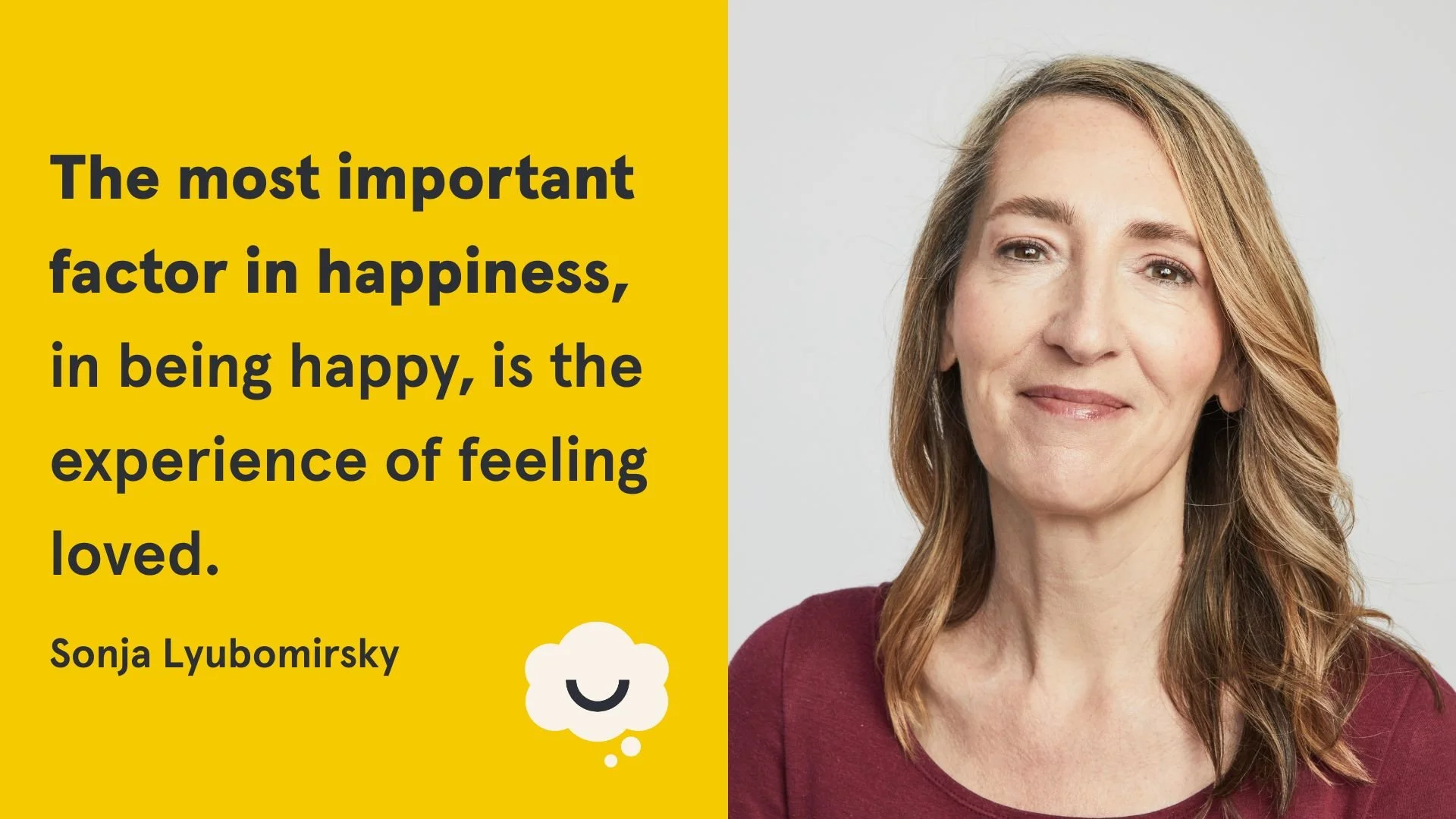
The most important factor in happiness, in being happy, is the experience of feeling loved. — Sonja Lyubomirsky
How to Feel More Loved in Everyday Life
Learn what love actually looks like in daily life.
Many of us expect love to feel effortless. But the research suggests love is most often felt through responsiveness — when someone listens, remembers, checks in, or adjusts to our needs. Updating what we count as “real” love helps us stop overlooking care that shows up quietly.
Let the small moments actually count.
Research shows that small things — texts, favors, listening, and shared laughter — add up more than we think. Actively noticing and mentally banking these moments can help us keep a more accurate sense of how much love is already present.
Remember that feeling loved often starts with helping someone else feel loved by you.
Love is deeply reciprocal. When we express care in ways that make others feel understood and appreciated, those same feelings are more likely to come back to us.
Take Action This Week: Pick one person in your life and do something small that helps them feel understood or appreciated — think: listening closely, following up on something they shared, or showing that you remembered what matters to them.
Coming Up Next Week...
Is there are way to date better — according to science? That’s the question I’ll be discussing with Tim Molnar, behavioral scientist and author of Date Smarter: A Strategic Guide to Modern Romance.
Looking for more?
You can find all our companion guides from this season of The Happiness Lab on DrLaurieSantos.com/Newsletter.
Did you get this newsletter from a friend? Sign up here to receive weekly happiness tips directly in your inbox!