
Why Chasing Success Can Leave You Feeling Stuck (with David Brooks)

New episode of The Happiness Lab: “Why Chasing Success Can Leave You Feeling Stuck (with David Brooks)”
Here's a question: What if the reason you feel stuck isn't that you're not working hard enough—but that you're keeping score on the wrong game entirely?
Most of us step into the new year armed with familiar resolutions: run faster, earn more, look better. But New York Times columnist David Brooks has spent years studying what actually makes people flourish, and he's discovered something counterintuitive: we're often going after the wrong things.
We obsess over what Brooks has called “resume virtues” — the stuff that looks impressive on a resume. But we often go after these external markers at the expense of what David calls our "eulogy virtues": the stuff people will remember us for when we’re gone, character traits like kindness, courage, and the capacity for deep connection.
And David has found that we can't build these eulogy virtues alone. Character development happens relationally through the communities we build.
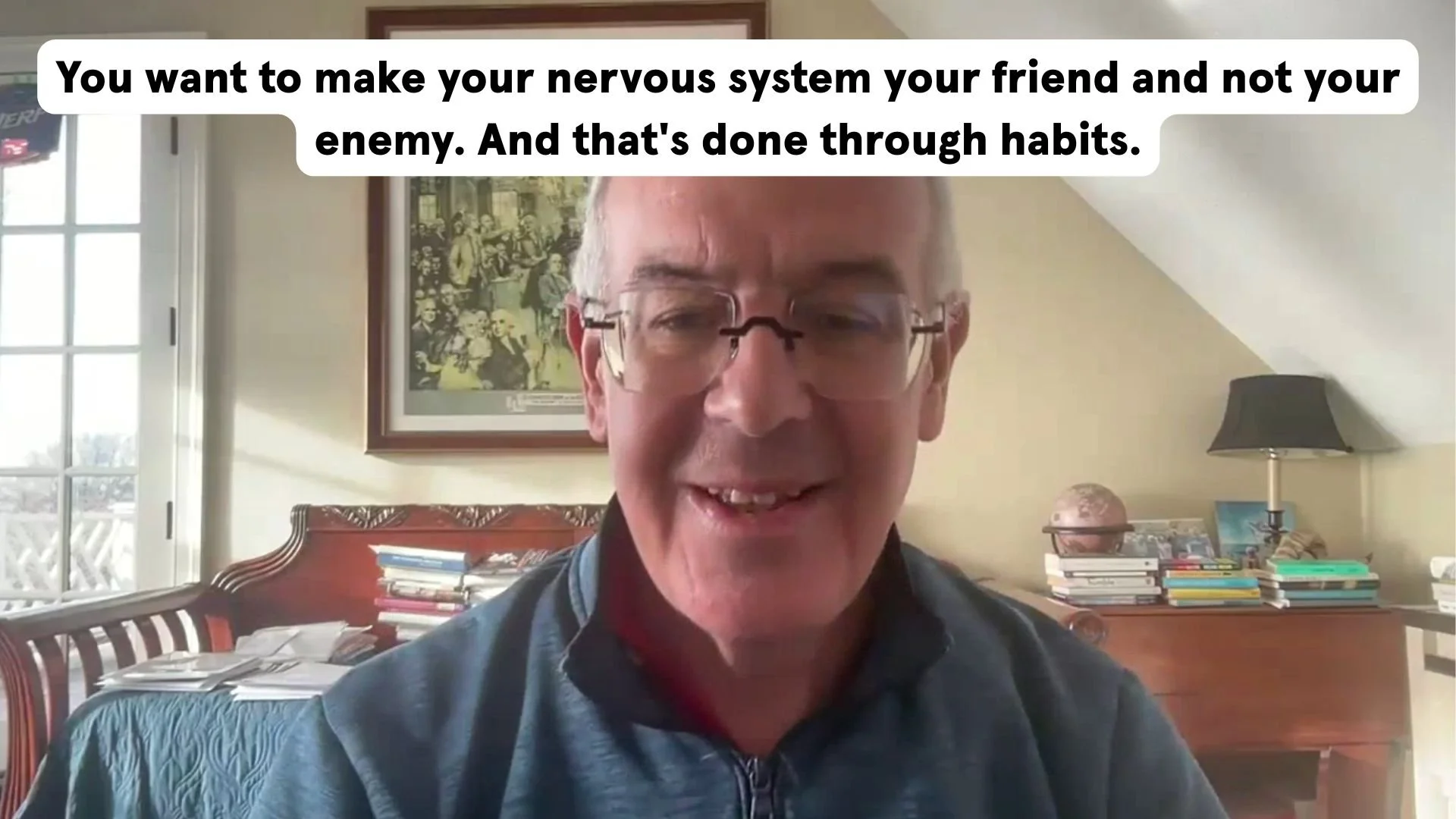
You want to make your nervous system your friend and not your enemy. And that's done through habits. — David Brooks
How to Build Character and Connection with David Brooks
Move from self to service.
David tells the story of Luke, a hospital janitor who transformed his work by remembering what gives him purpose. Instead of thinking of his job as simply "cleaning rooms," Luke chose to see it as "serving patients and their families" — comforting anxious relatives, brightening patients' days with conversation, becoming part of their healing journey. Everyone faces this choice daily: What is the moral purpose of what you’re doing, beyond the metrics?
Become a "weaver" in your community.
Weavers are people who actively strengthen community bonds through consistent, caring actions. David's organization Weave celebrates these community builders—like the Florida woman who helps kids cross the street every morning because "it's just what neighbors do." Weavers see connection as a responsibility, not an achievement.
Build character through small daily habits.
David shares how Dwight Eisenhower identified anger as his "core sin" at age 9 and spent decades working to improve this trait through small daily practices. Identify your own core weakness and work on it gradually, the way you'd learn any craft.
Surround yourself with moral exemplars.
We absorb values from people we admire, often unconsciously. Read biographies of people you respect. Keep their portraits visible. As David says, surround yourself with "the eyes of the dead and the eyes of the admired" to lift your standards.
Make others feel seen, heard, and understood.
Practice asking deep questions that go beyond surface level. Ask "What's been on your mind lately?" or "What's challenging you right now?" Then listen fully without planning your response.
Take Action This Week: Identify one "resume virtue" goal you've been chasing. Then ask: What's a eulogy virtue I could purse instead? How might I pursue this goal relationally instead of alone?
Coming Up Next Week…
How many creative ideas could you generate in 20 minutes? Most people underestimate the answer. Next week, Dr. George Newman reveals the "creative cliff illusion"—the mistaken belief that our creativity will decline when it actually improves or continues. Tune in to discover why pushing past that "empty" feeling is exactly when breakthrough ideas emerge.
Looking for more?
You can find all our companion guides from this season of The Happiness Lab on DrLaurieSantos.com/Newsletter.
Did you get this newsletter from a friend? Sign up here to receive weekly happiness tips directly in your inbox!